

Executive Summary
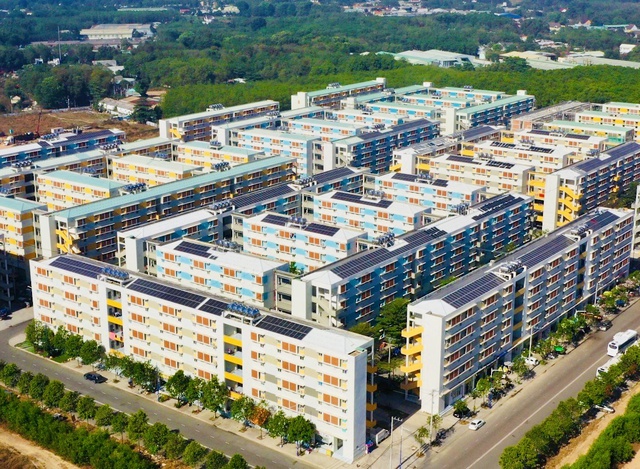
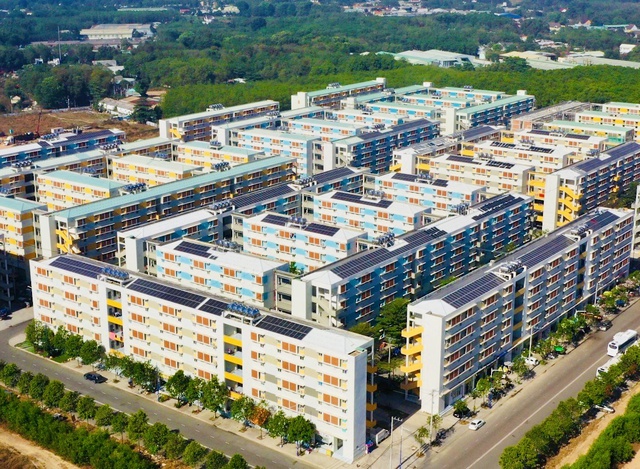
The Vietnamese Government has officially activated a consolidated legal framework to accelerate the development of social housing and worker accommodations. Executed through the recent amendments (Decree 261/2025/ND-CP and Decree 54/2026/ND-CP) to Decree 100, which took effect on February 9, 2026, this regulatory overhaul aims to eradicate historical bottlenecks in land valuation, developer margins, and buyer eligibility.
For Foreign Direct Investment (FDI) real estate developers, industrial park operators, and multinational manufacturing corporations, this framework is a game-changer. It introduces highly lucrative commercial offsets, complete exemptions from land use fees, and stringent new ESG-aligned environmental standards for industrial housing, fundamentally altering the Return on Investment (ROI) calculus for social infrastructure projects.
The Regulatory Overhaul: Key Financial and Structural Highlights
The amended decrees synchronize the entire lifecycle of social housing projects, offering unprecedented incentives to crowd-in private capital:
-
The 20% Commercial Offset: Developers are now legally permitted to allocate up to 20% of the residential land within a social housing project for commercial housing development, or utilize up to 20% of the total floor area for commercial and service purposes.
-
Total Land Fee Exemptions: Investors are entirely exempt from land use fees and land rental for the entire project area. Crucially, the new framework abolishes the requirement to undergo protracted land valuation and formal exemption application procedures, drastically reducing administrative delays.
-
Profit Margins and Credit: While the profit margin on the social housing component is capped at 10%, developers constructing rental-only social housing can access preferential state credit covering up to 80% of total investment capital.
-
The 20% Land Fund Mandate: In Grade III to Special-grade urban areas, developers of commercial housing must reserve 20% of their serviced residential land for social housing. However, the law now explicitly allows for flexible compliance: developers can provide land at alternative off-site locations or make a cash-in-lieu financial contribution to the local budget.
Strategic Analysis: Implications for Business & Investment
At Lexora Partner, we evaluate this framework through the dual lenses of real estate financial structuring and corporate ESG compliance:
1. The Commercial-Social Arbitrage
Historically, foreign developers shied away from social housing due to compressed margins and bureaucratic friction.
-
Analysis: The new 20% commercial offset fundamentally changes the financial model. By cross-subsidizing the project, developers can leverage the zero-land-cost advantage of the entire site to construct high-yield commercial shophouses or mid-tier apartments within the 20% allocation. The outright elimination of land valuation procedures removes one of the most notorious legal bottlenecks in Vietnam’s real estate sector, enabling significantly faster project execution and capital recycling.
2. ESG Compliance and the “Green Buffer” Mandate
The decree introduces stringent environmental standards for worker housing in industrial zones, notably mandating a minimum 10-meter green buffer zone.
-
Analysis: For FDI manufacturers and Industrial Zone (IZ) developers, this is not merely a construction regulation; it is a statutory ESG mandate. Providing high-quality, green worker accommodation directly fulfills the “Social” pillar of corporate ESG metrics. Furthermore, integrating these green buffer zones aligns perfectly with broader national strategies toward sustainable, net-zero industrial parks. IZ developers who proactively upgrade their master plans to include compliant worker housing will command a premium in attracting top-tier, sustainability-focused MNC tenants.
3. Strategic Flexibility for Luxury Developers
-
Analysis: The explicit legal recognition of “cash-in-lieu” or alternative off-site land provision for the 20% social housing mandate is a massive relief for ultra-luxury and boutique commercial developers. It allows them to maintain the exclusive positioning of their prime real estate projects in central business districts without the operational dissonance of integrating low-income housing on-site.
Lexora Partner’s Perspective: Actionable Counsel for Developers
The legal foundation is now set for a robust social housing cycle. Lexora Partner advises real estate funds and corporate boards to take immediate action:
-
Recalibrate Financial Models: Real estate developers should immediately update their feasibility studies to model the internal rate of return (IRR) using the new 20% commercial offset combined with the total exemption from land use fees.
-
Audit Industrial Zone Master Plans: Operators of existing and planned Industrial Zones must audit their 1/2000 and 1/500 zoning plans. Ensure that designated worker accommodation zones comply with the new 10-meter green buffer requirement to avoid future licensing halts.
-
Strategic Partnerships: We anticipate a surge in Joint Ventures (JVs) where foreign capital partners with local developers holding “clean” land banks designated for social housing, leveraging the expedited administrative procedures introduced by these decrees.
Lexora Partner – Precision legal strategy for sustainable real estate development.
For specialized legal advisory on Real Estate Structuring, Industrial Zone Compliance, and ESG Integration, please contact our expert team.
