

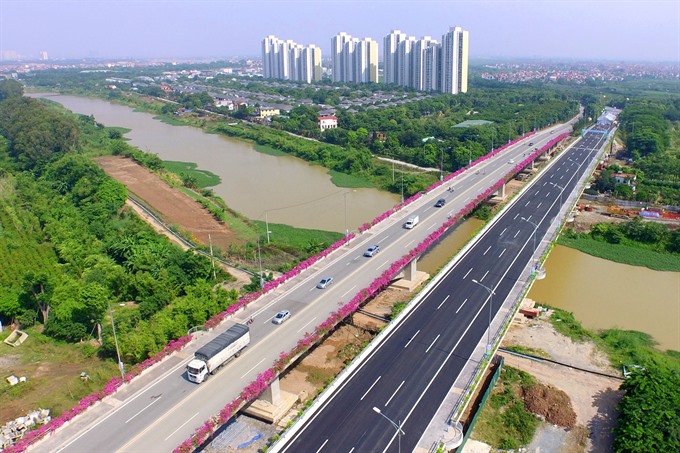
The promulgation of Decree No. 257/2025/ND-CP on October 8, 2025, marks a pivotal development in Vietnam’s ongoing effort to restructure and improve the legal framework for build-transfer (BT) projects — a form of public-private partnership (PPP) that has historically faced challenges concerning transparency, valuation of land payment, and project supervision. Signed by Deputy Prime Minister Ho Duc Phoc, the Decree aims to remove procedural bottlenecks, establish clear administrative responsibilities, and align BT project implementation with the 2020 Law on Investment in the Form of Public-Private Partnership.
For nearly a decade, BT projects have been both an instrument of infrastructure expansion and a source of legal controversy. Their unique payment mechanism — whereby investors build infrastructure projects in exchange for land use rights — has led to disputes over asset valuation, public asset loss, and accountability gaps between central and local authorities. Against this backdrop, Decree 257/2025/ND-CP seeks to provide a unified and legally coherent process for BT project formulation, approval, investor selection, and contract execution.
The Decree establishes detailed procedural frameworks depending on funding sources and the level of approving authority. Projects subject to investment policy approval by the National Assembly will undergo a multilayered appraisal process, starting with the pre-feasibility study report, followed by the feasibility study, technical design approval, and the eventual contract signing. This hierarchical approval chain underscores the Government’s intention to bring BT projects under tighter legislative scrutiny, especially those involving large-scale public investments or sensitive land funds.
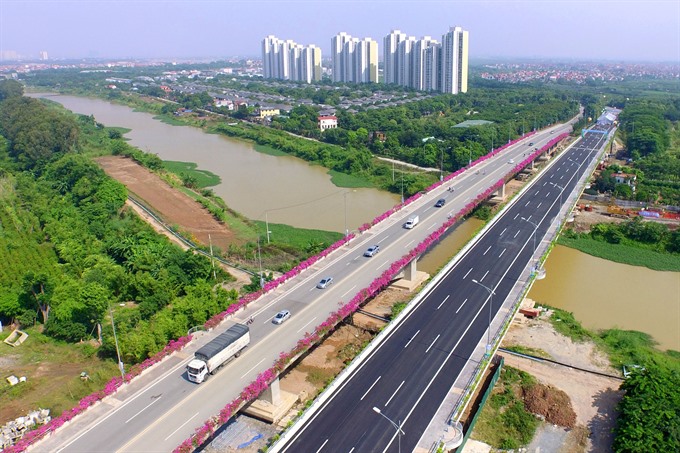
For BT projects financed by the state budget or a combination of land fund and budget resources, Decree 257 introduces a clearer two-step design and approval mechanism, ensuring that the formulation of feasibility reports and technical designs adhere strictly to appraisal requirements. Notably, the Decree allows greater procedural distinction between projects paid purely with land funds and those combining both fiscal and non-fiscal resources — a critical point to prevent overlapping payment mechanisms and dual valuation risks.
The Decree also delineates a distinct path for projects proposed by investors under the investor appointment method, in accordance with the Law on Investment in the Form of PPP. In these cases, investors must submit both the feasibility study and draft contract together with their capacity profile for state appraisal. This procedural reversal — allowing investor-proposed projects but under the strict supervision of competent authorities — reflects a shift toward controlled flexibility, enabling private sector initiative while preserving state oversight over project economics, risk allocation, and contract fairness.
In terms of investor selection, Decree 257 codifies the use of open bidding as the default mechanism, supplemented by alternative methods such as competitive negotiation, investor appointment, or selection in special cases under Articles 37–40 of the PPP Law. This harmonization between the Decree and existing PPP legislation closes prior legal gaps where BT projects operated outside standardized selection procedures. Moreover, agencies authorized to sign BT contracts now bear explicit responsibility for supervising project quality and compliance under Clause 2, Article 59 of the PPP Law — effectively ensuring that the contractual performance of BT investors meets public infrastructure and safety standards.
Decree 257/2025/ND-CP can therefore be interpreted as both a legal and institutional correction of Vietnam’s earlier BT model. By codifying procedural transparency, defining clear roles among approving authorities, and aligning investor selection with PPP principles, the Decree attempts to restore public trust in BT projects as legitimate instruments of infrastructure development. The new regulation also signals a policy shift: BT contracts will no longer serve as ad hoc land-exchange instruments but must operate within a legally consistent PPP framework emphasizing accountability, value-for-money assessment, and equitable risk distribution between the state and private investors.
In summary, the issuance of Decree 257 marks a significant milestone in Vietnam’s reform of public investment law. It not only addresses the governance challenges that plagued previous BT arrangements but also reinforces the Government’s broader commitment to a rule-based, transparent, and performance-driven PPP environment — one that supports infrastructure modernization without compromising fiscal discipline or public asset integrity.
