

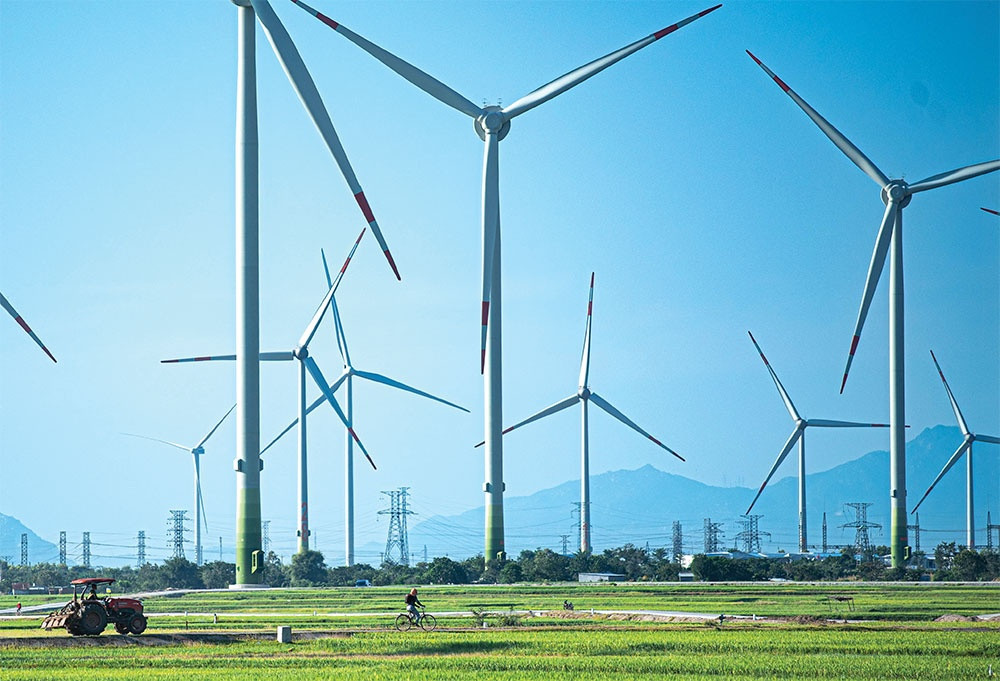
The promulgation of Government Resolution No. 328/NQ-CP dated October 13, 2025, implementing the Politburo’s Resolution 70-NQ/TW on national energy security, marks a decisive legal step in reshaping Vietnam’s energy governance framework toward 2030, with a long-term vision to 2045. Beyond being a policy statement, this document signifies a structured transition from a resource-based to a resilience-based model of national energy security — one that aligns closely with Vietnam’s international commitments on climate change and the global trend toward decarbonization.
The Government’s action program introduces measurable and legally binding objectives: total primary energy supply of 150–170 million tons of oil equivalent by 2030, final consumption capped at 120–130 million tons, and energy savings of 8–10 percent. Importantly, it also stipulates a 15–35 percent reduction in greenhouse gas emissions compared to the business-as-usual scenario. From a legal standpoint, these targets are not merely aspirational—they form part of a broader normative architecture that operationalizes the Politburo’s directive through enforceable planning instruments, fiscal measures, and sectoral mandates.
A key innovation is the integration of domestic energy diversification with legal obligations on sustainability. Ministries and provincial authorities are tasked with drafting sectoral roadmaps to ensure security of supply while promoting renewable sources, reducing import dependence, and developing national energy hubs for LNG, electricity, refined oil, and renewables. These hubs are envisioned as “specialized legal zones” where policies on licensing, pricing, and offtake contracts will be synchronized, thus creating a quasi-autonomous legal ecosystem for investment and innovation.
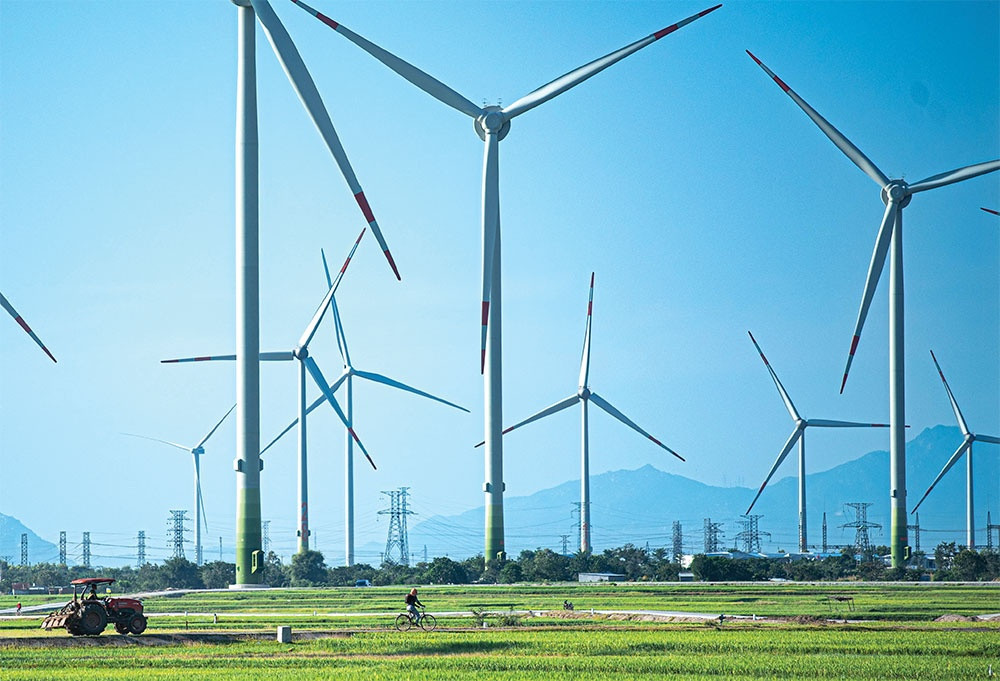
Perhaps the most transformative element lies in the fiscal and environmental compliance mechanisms. The Government’s plan to impose a carbon tax on fossil fuel consumption and to establish emission standards introduces a new layer of environmental governance into Vietnam’s legal landscape. This approach effectively internalizes the Polluter Pays Principle into national law, ensuring that environmental costs are reflected in production and consumption decisions. In parallel, the gradual phasing out of inefficient, high-emission machinery and the enforcement of mandatory energy-saving quotas by sector reflect a move from voluntary compliance to regulatory obligation.
The Action Program also embeds a forward-looking vision of technological sovereignty. The allocation of at least 2 percent of the energy sector’s GDP for R&D, coupled with the training of 25,000–35,000 engineers and experts — especially in nuclear and renewable energy — demonstrates a deliberate state-led strategy to build indigenous capacity. Moreover, the explicit policy to attract foreign and overseas Vietnamese experts underscores a legal recognition that energy security is no longer a matter of self-sufficiency, but of global integration and knowledge transfer.
From a legal and policy perspective, Resolution 328/NQ-CP therefore represents a cornerstone in Vietnam’s energy law evolution. It blends hard law (through fiscal measures, emission standards, and licensing regimes) with soft law (through strategic planning and policy incentives) to forge a hybrid governance framework. The underlying philosophy is clear: energy security in the 21st century must be anchored not in extraction, but in efficiency, innovation, and sustainability.
In essence, the new action program elevates Vietnam’s legal commitment from ensuring supply sufficiency to ensuring climate-compatible sovereignty. It situates Vietnam firmly within the global energy transition narrative, aligning domestic legislation with the imperatives of the Paris Agreement, the Net Zero 2050 roadmap, and the emerging carbon market architecture in Asia-Pacific.
